Teeth Whitening in Front Royal, VA: Professional Options That Actually Work
If you've been thinking about whitening your teeth but aren't sure where to start, you're in good company. It's one of the most common questions I hear from patients here at Front Royal Dental Group — and honestly, it makes a lot of sense. Whiter teeth can make a real difference in how confident you feel when you smile. The tricky part is that there are so many options out there, and it's hard to know which ones are actually worth your time.
Let me walk you through what we know, what the research shows, and how we approach teeth whitening at our practice.
Why Teeth Change Color Over Time
Teeth pick up stains from two places. The first is the surface — coffee, tea, red wine, and tobacco are the usual suspects. These are called extrinsic stains, and they sit on the outer layer of the tooth.
The second type goes deeper. As we get older, the outer enamel naturally thins, and the yellowish layer underneath (called dentin) starts to show through more. That kind of discoloration isn't something you did wrong. It's just how teeth age. Both types respond differently to whitening, which is one reason a quick check-in with your dentist before starting any treatment makes a real difference.
The Three Main Whitening Options
1. In-Office Whitening
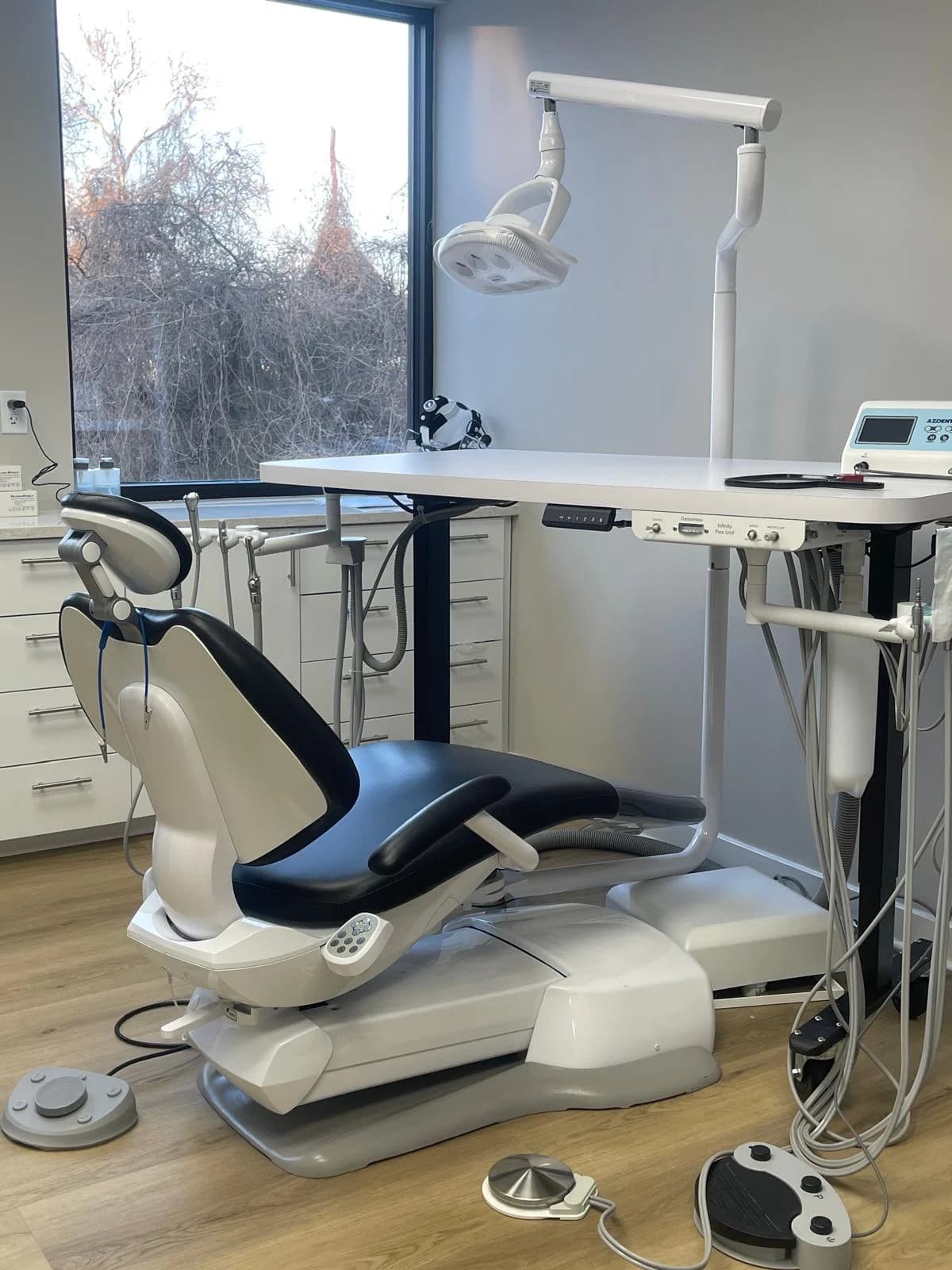
This is the option we do right here in the chair. We apply a professional-strength bleaching gel to your teeth after protecting your gums with a shield or gel. Some in-office systems also use a light to help speed up the chemical reaction.
The whole thing typically takes one visit. According to a study published in the Journal of Pharmacy and Bioallied Sciences, patients in the in-office bleaching group had the highest satisfaction scores immediately after treatment — an average of 4.8 out of 5. That tracks with what I see in practice. Patients often walk out feeling noticeably different about their smile.
One thing to be aware of: in-office whitening tends to cause a bit more sensitivity than other methods, at least in the short term. We'll talk through that with you ahead of time so there are no surprises.
2. Take-Home Trays from Your Dentist
This is a great middle-ground option. We take impressions of your teeth and create custom-fitted trays, then send you home with a professional-strength bleaching gel. You wear the trays for a set amount of time — usually a few hours during the day or overnight, depending on the gel.
Because the gel is stronger than what you'd find in a store, your teeth may brighten faster than with an over-the-counter product. The results are gradual, which many patients actually prefer. You can also re-use the trays down the road with a gel refill, which makes this a value-driven option over time.
3. Over-the-Counter Products
Strips, rinses, whitening toothpastes — there are a lot of products on the shelf. They do contain peroxide, but at lower concentrations than professional options. Research shows they're generally the least effective of the three approaches, though they can help with mild surface stains.
The main concern with OTC products isn't necessarily that they're harmful, but that they're not tailored to you. They don't account for any existing sensitivity, gum issues, or areas where you might have dental work that won't respond to whitening.
Ready to get started? Schedule a visit with Front Royal Dental Group.
Why a Dental Exam Matters First
The American Dental Association recommends a clinical exam before starting any whitening treatment. And I'd say the same thing to any of my patients here.
If there's any untreated decay, gum disease, or a cracked tooth, whitening gel can actually make things worse — causing discomfort and potentially aggravating a problem that was already there. A quick look before you start lets us catch anything like that and take care of it first.
It also helps us figure out what kind of staining you have and which option is likely to work best for your specific situation. Not everyone needs the most aggressive approach.
What Results Can You Expect?
Results vary — and that's not me being vague, that's just honest. The type of staining, the natural shade of your teeth, and even things like enamel thickness all play a role. A 2024 systematic review found that all three types of professional whitening — in-office, at-home, and combined approaches — can be effective in changing tooth color.
What I tell my patients is this: most people see a real improvement, and most feel good about the outcome. In a large patient satisfaction study published in Minerva Stomatologica, 95.7% of patients said they were satisfied with their whitening treatment. Those are encouraging numbers, and they line up with what I see in practice.
Results also aren't forever. Whitening isn't a one-time fix. Maintenance matters — regular cleanings, watching what you eat and drink, and occasionally touching up at home can help results last much longer.
What About Sensitivity?
Sensitivity after whitening is real, and it's worth mentioning upfront. It's usually temporary, and it doesn't happen to everyone. In the same Minerva Stomatologica study, about a third of satisfied patients reported some postoperative sensitivity — which means two-thirds had no significant sensitivity at all. We can also take steps to reduce it, like using lower-concentration gels or spacing out treatment sessions.
If you have sensitive teeth already, just tell us. We'll build that into the plan from the start.
Whitening and Your Other Dental Work
Crowns, veneers, and bonding don't respond to bleaching the way natural teeth do. So if you have visible restorations on your front teeth, it's worth having a conversation about how whitening fits into the bigger picture. Our cosmetic dentistry team is happy to talk through what makes sense for your specific situation.
Frequently Asked Questions
How long does professional whitening last? It depends on your habits and which method you use, but many patients find results last anywhere from several months to a couple of years with good maintenance. Touch-up trays at home can help extend results. Treatment timelines and longevity vary based on individual factors.
Is whitening safe for my enamel? When used as directed, whitening products are generally considered safe. Research does show that higher-concentration in-office gels may cause more temporary enamel changes than at-home options, but those effects are typically short-term. Starting with a dental exam helps make sure you're a good candidate.
Can I whiten if I have sensitive teeth? Often, yes — but we'd want to know about your sensitivity before choosing a method. There are gentler protocols and lower-concentration options that may work well for you. It's always a conversation, not a one-size-fits-all answer.
Will whitening work on my dental crowns or veneers? Whitening gel doesn't change the color of crowns, veneers, or bonded restorations. If you have these on visible teeth, we can talk through how to get your natural teeth to match — or whether another approach might be a better fit for what you're hoping to achieve.
If you have questions about whitening or just want to know what might work for your teeth, we're here to help. There's no pressure and no commitment — just a conversation so you can make the choice that feels right for you.
Have questions? Call us at (540) 636-2003.
See also:
More from Our Blog

Family Dentistry in Front Royal | Front Royal Dental Group
Front Royal Dental Group offers gentle, patient-focused dental care for every age — from baby teeth to lifelong health. Learn what to expect at each stage.
Read more
Emergency Dental Care in Front Royal VA | Front Royal Dental Group
Tooth pain or dental emergency in Front Royal, VA? Front Royal Dental Group offers same-day care. Call us — we'll walk you through every step.
Read more
Porcelain Veneers in Front Royal VA | Front Royal Dental Group
Curious about porcelain veneers in Front Royal, VA? Dr. Abdoun walks you through the full process — from consultation to bonding — in clear, simple terms.
Read more